
Hyundai IONIQ EV Towbars
The Hyundai IONIQ EV is a practical electric liftback designed for daily use. Owners often equip it for carrying bike carriers or transporting light accessories. For the IONIQ EV, 1 certified towbar variant is available, engineered specifically for the requirements of this model. To explore towbars for additional Hyundai vehicles, visit the Hyundai towbar category.
- HYUNDAI IONIQ EV *BCO*
More information »
Towbar RRP Includes a Special Introductory Reduction of £15 (ex-Vat)PRICE (exc. VAT)
£411.00Available: 5
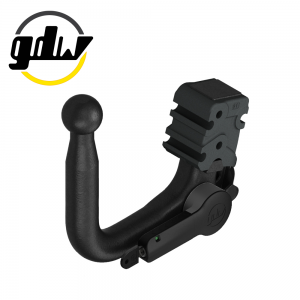
Towing Specifications
The available towbar for the Hyundai IONIQ EV (Liftback, 03/2016–present) is approved for:
- Braked towing capacity: See Certificate of Conformity (COC) or vehicle documentation for the official limit.
- Unbraked towing capacity: Refer to the vehicle handbook or VIN plate.
- Maximum vertical load (S-value): 75 kg
- D-value: Not specified. Refer to type approval documentation if required.
This variant is only suited for use with a bike carrier. It is not approved for towing trailers, caravans, or for use on HYBRID and plug-in HYBRID versions of the IONIQ. Always consult the vehicle COC or VIN plate for model-specific towing limits.
Trailer Electrics Compatibility
When a towbar is installed on the Hyundai IONIQ EV, a compatible electrical interface is required for safe operation of bicycle carrier lighting. The vehicle’s electrical systems need to support activation of brake lights, indicators, and, if equipped, rear fog lights on the accessory. Modern vehicle electronics often require correct coding for the electrical system to detect the connected load and manage warning systems or deactivation of specific lighting functions.
Vehicle Technology Compatibility
- Compatible with parking sensors (towbar position designed to avoid interference).
- System integration for trailer detection and rear-vehicle warning lights, relevant for bike carriers.
- Designed for EV-specific requirements—does not add towing capability, only suitable for non-trailer accessories.
- Not suited for use on HYBRID and plug-in HYBRID IONIQ variants.
- Check control and stability programs are not affected for accessory use.
Installation Notes
- Bumper modification: No bumper cut is required for installation.
- Remove bumper required: No bumper removal is necessary.
- Exclusions: Only suited for bike carrier. Not suited for HYBRID or plug-in HYBRID IONIQ models.
- All ECS towbars provide OEM-style fitment and are corrosion protected for long-term reliability.
Related Hyundai Models
If you are interested in towbars for other Hyundai vehicles, consider the following models:
Frequently asked questions about the Hyundai IONIQ EV towbars
- Can I use the Hyundai IONIQ EV towbar for towing a trailer?
No. The available towbar is only approved for bike carrier use. It is not certified for towing any trailer or caravan.
- Is the towbar compatible with HYBRID and plug-in HYBRID IONIQ models?
No. This towbar is not suited for HYBRID or plug-in HYBRID versions of the Hyundai IONIQ.
- Does the installation require cutting or removing the bumper?
No bumper modification or removal is required for fitting this towbar.
- Will the towbar interfere with parking sensors or vehicle electronics?
The towbar is designed to avoid interference with parking sensors and integrates cleanly with electric vehicle systems for accessory use.
- What is the maximum vertical load for carrying a bike carrier?
The S-value for this towbar is 75 kg. Do not exceed this load when using rear-mounted carriers.
Browse the available Hyundai IONIQ EV towbar and check compatibility for your needs. For more Hyundai towing solutions, visit the Hyundai overview page for additional models and technical information.